


State-of-the-Art Technology for Optimum Results
Kugler Vision, the Midwest’s leader in advanced vision correction, is a highly specialized refractive surgery practice with state-of-the-art technology and expertise. Our mission is to maximize the human experience for our patients by helping them see the world with their best vision possible. We are a lifestyle enhancement center committed to empowering our patients with the best vision medically achievable, for a life without glasses and contact lenses.
Lance Kugler, MD and our team of vision experts maintain an intense dedication to offering today’s most exciting and transformative technological advancements. Learn more about the state-of-the-art technology offered at Kugler Vision.
Diagnostic Technology at Kugler Vision
At Kugler Vision, diagnostic technology is used at EyeAnalysis eye exams and consultations to determine whether someone is a good candidate for laser vision correction. The results from these tests allow our vision experts to determine the best treatment:
- OCULUS Pentacam HD
- Visiometrics HD Analyzer (also known as AcuTarget)
- Tracey Technologies iTrace Wavefront Analyzer
- KONAN Endothelial Specular Microscopy
- TearScience LipiView II Tear Film Aberrometer and meibomian gland analyzer
- Optovue Optical Coherence Tomography (OCT)
- Haag-Streit LENSTAR
- Nidek Autorefractor ARK-1Contoura / VARIO topography analyzer
Laser Treatment Technology at Kugler Vision
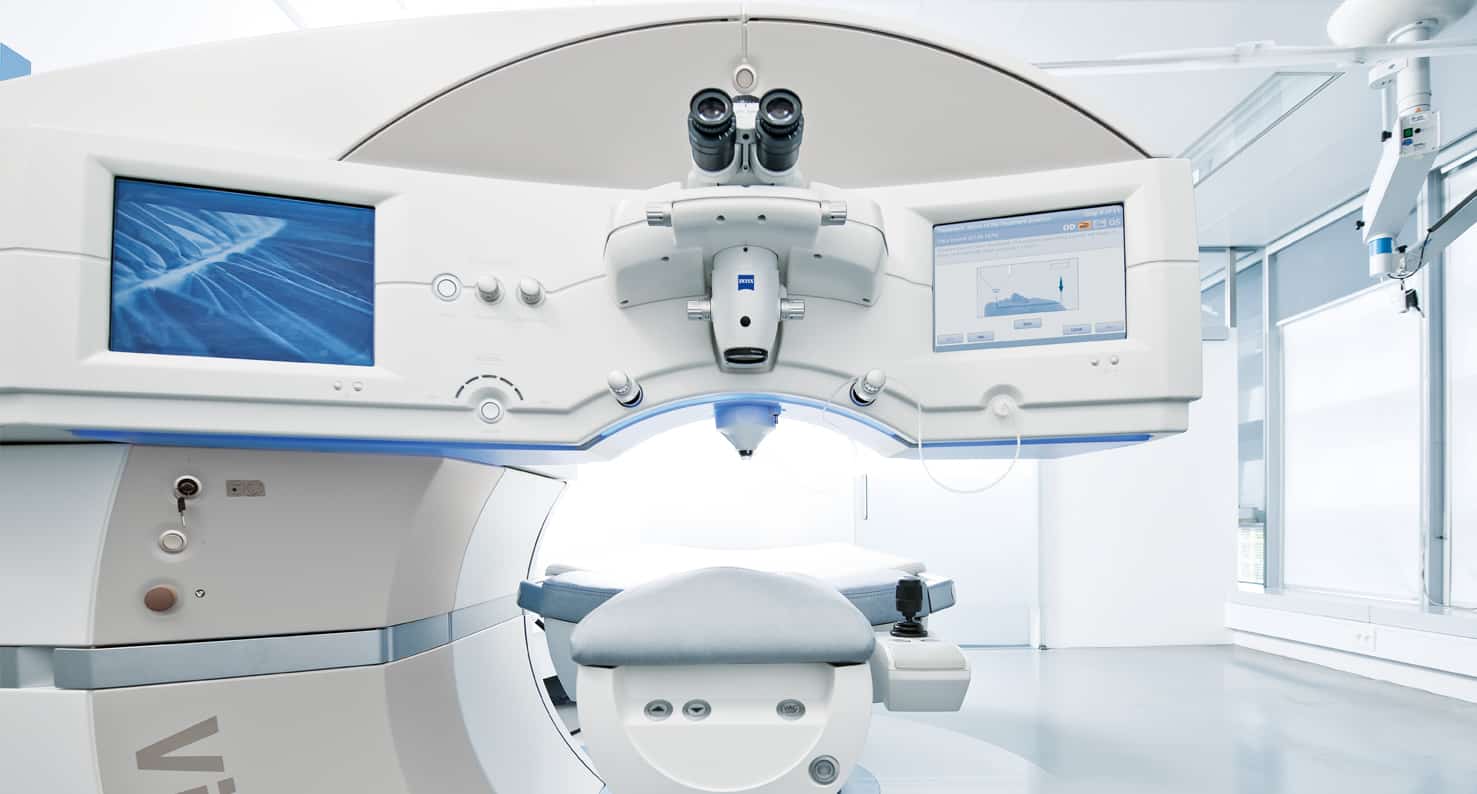 Kugler Vision is the only refractive surgery center in Nebraska or Iowa to offer all seven refractive procedures available today. We perform these procedures with this laser technology:
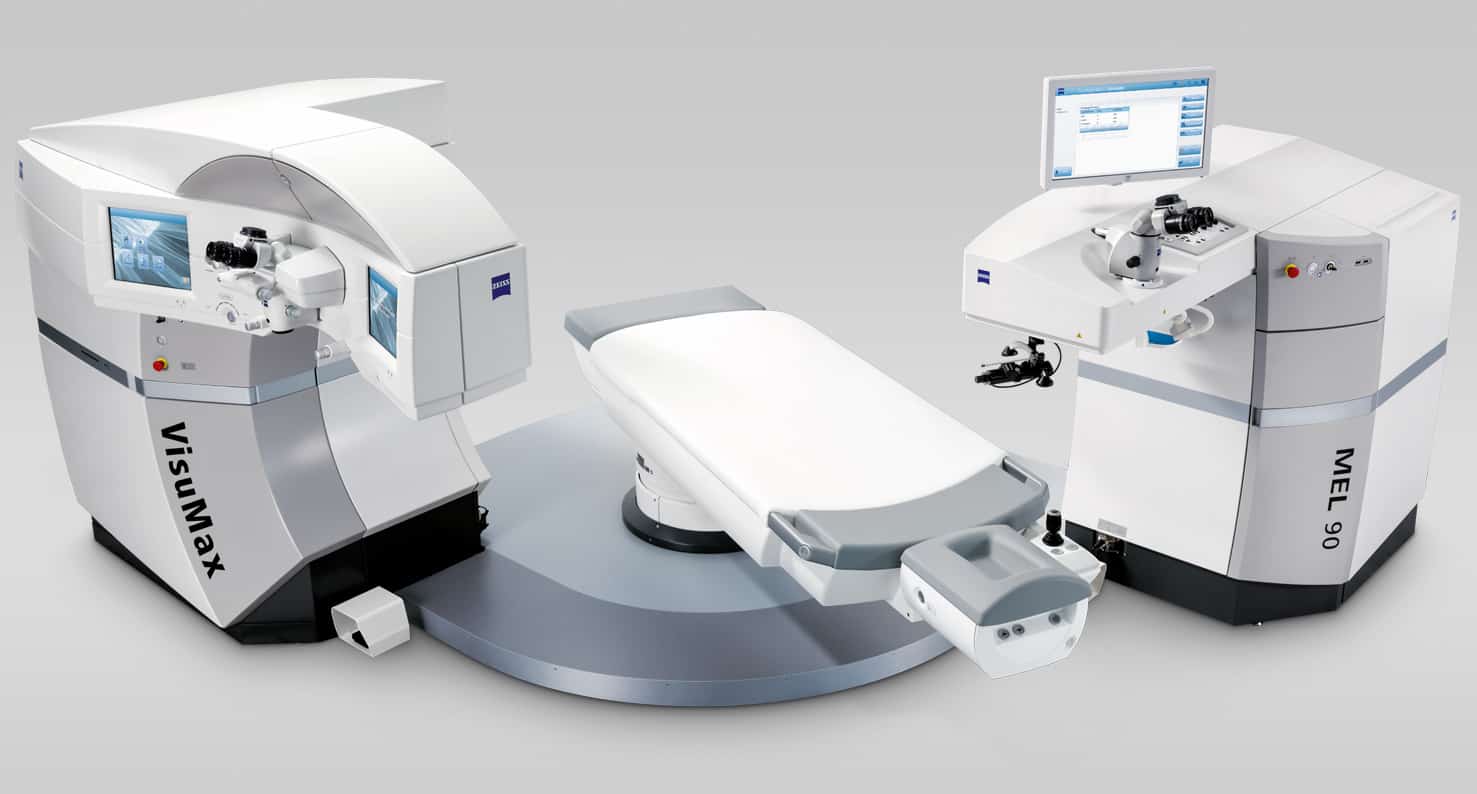
- Zeiss VisuMax Femtosecond Laser
- WaveLight FS200 Femtosecond Laser
- Wavelight EX500 Excimer Laser
- Contoura / VARIO Topography-Guided System
- LENSAR Femtosecond Laser
- NGENUITY 3D Visualization System
What Is a Femtosecond Laser?

A femtosecond laser is the first laser used during a vision correction procedure. This specific laser technology is the safest, most precise approach for these three procedures:
- LASIK flap for the excimer laser to reshape the cornea
- SMILE pocket for the surgeon to extract the lenticule
- Corneal inlay insertion
- Lens softening
- Astigmatism reduction
We are proud to provide four femtosecond lasers: Zeiss VisuMax, WaveLight FS200, OptiMedica Catalys, and Alcon LenSx. Each laser allows for a fast, comfortable, and precise experience. The surgeon decides which laser to use based on the diagnostic results from the patient’s initial consultation.
What Is an Excimer Laser?

The excimer laser is the second laser used in LASIK and PRK. An excimer laser reshapes the cornea. With excellent precision and accuracy, the excimer laser controls every single laser pulse, allowing the laser treatment to last just seconds.
The lasers at Kugler Vision provide wavefront-optimized treatment for every procedure, which improves your quality of vision in all lighting conditions, including nighttime.
Some of the other features of the excimer laser:
- It has extremely precise calibration and is calibrated before every treatment.
- It takes into account the specific curvature of the patient’s eye, with the intent to preserve the naturally aspheric prolate corneal shape after treatment.
- Clinical data presented to the FDA showed that patients’ quality of night vision after treatment was better than before treatment.
Speed and Precision
The excimer laser’s speed is important because it improves the precision of the treatment. Each time the laser pulses, it removes a microscopic amount of tissue. By removing small pieces of tissue in a predictable pattern, the laser can alter the vision of the eye. This is the basis for laser eye surgery. The more precise the laser beam, the more precise the results can be predicted.
The laser core of the excimer is extremely stable, which means that the energy delivered by each pulse is reliable and consistent.
Eye Tracking
“What if I move my eyes during the procedure?” is a common question we hear. There is nothing the patient can do to “mess up” their laser vision correction. Our excimer lasers have eye-tracking systems, which are crucial to the success of modern laser surgery. These systems follow the eye during the treatment from start to finish and adjust the location of the laser beam accordingly.
Excimer lasers use an infrared pupil-tracking system that determines the exact pupil position once every 2.5 milliseconds. The lasers automatically align to the pupil position, then check again one more time to confirm the pupil is still in the same place before pulsing the laser. This happens 400 times every second, once for every laser pulse. If the eye moves too quickly or moves out of the range of the laser, the laser will stop and wait for the surgeon to position the eye back in the center. Once the eye is back where it belongs, the treatment resumes where it left off. This remarkably fast and sophisticated system ensures that each pulse of the laser is positioned in the perfect spot on the eye.
Wavefront Optimized Treatment
Wavefront optimized treatment improves the shape of the cornea by taking the curvature of the cornea into account and increasing the number of peripheral pulses. This delivers treatment to the eye that results in a natural shape and therefore superior vision quality.
Contoura / VARIO Topography-Guided System
The Contoura / VARIO Topography-Guided System delivers a customized treatment based on eye topography. In most cases, this system is used for irregular corneas that exist outside the parameters of the wavefront optimized treatment. It allows us to treat people with irregular corneas who were not candidates before.
Safety
One of the most common concerns people have is the safety of laser eye surgery. Three aspects of laser eye surgery that contribute to its overall safety are:
- Proper patient evaluation before surgery
- Laser technology
- Proper postoperative care and follow-up
At Kugler Vision, we are proud to provide you with a thorough consultation where our surgeon will recommend the best procedure for you based on your full ocular analysis using our state-of-the-art diagnostic equipment.
All lasers approved by the FDA for use in vision correction must demonstrate a certain level of safety. These include, but are not limited to, the following:
- Electrical power backup in case of a power outage
- Calibration at the point of treatment
- Built-in safeguards that will pause treatment if necessary, with the ability to resume treatment from where it was paused
- An eye-tracking system that follows eye movements and adjusts the laser energy delivery accordingly. The laser must pause if the eye moves too far from the center of the laser.
- Extensive documentation of operation, service, and maintenance
After your procedure, we offer continued care — one day, one week, one month, six months, and one year — to ensure excellent results and high patient satisfaction.
Additional Questions?
 If you have more questions about the state-of-the-art technology used at Kugler Vision or the safety of laser vision correction, or if you would like to schedule a consultation with us to find out if you are a good candidate, please contact us at 402.558.2211.